In a world where many of us live in a near-constant state of alert, true relaxation can feel rare.
We try vacations, meditation apps, long baths, yet the nervous system often keeps humming in the background. Stress, tight shoulders and busy thoughts at bedtime all become normal. This is one reason people turn to craniosacral therapy (CST). It invites your body to slow down, reset, and remember how to rest.
Known for its light touch and slow pace, CST is widely described as a gentle, non-invasive way to help the body unwind.
A typical CST session happens in a calm, quiet environment. The practitioner uses subtle hand placements while you lie fully clothed on a table. The stillness alone can be powerful. Sessions are gentle and unhurried while light, precise touch helps your system settle. There is nothing you need to do. No stretching. No effort.
Because the work is so gentle, attention often turns inward. Without intense pressure or constant movement, there’s room to notice sensations and simply be.
It’s common for people to discover tightness in places they hadn’t recognized before, the jaw, the base of the skull, the diaphragm, the hips. As those areas soften, there can be a surprising emotional lightness too.
It’s as if the volume of the nervous system has been gently turned down.
You are not a problem to solve. You are a person who may simply need time, safety, and skilled support to allow your system to rebalance.
The quiet presence, respectful touch, and peaceful environment are often as healing as the techniques themselves.
This article uses material from Haller et al. BMC Musculoskeletal Disorders (2020) 21:1 https://doi.org/10.1186/s12891-019-3017-y
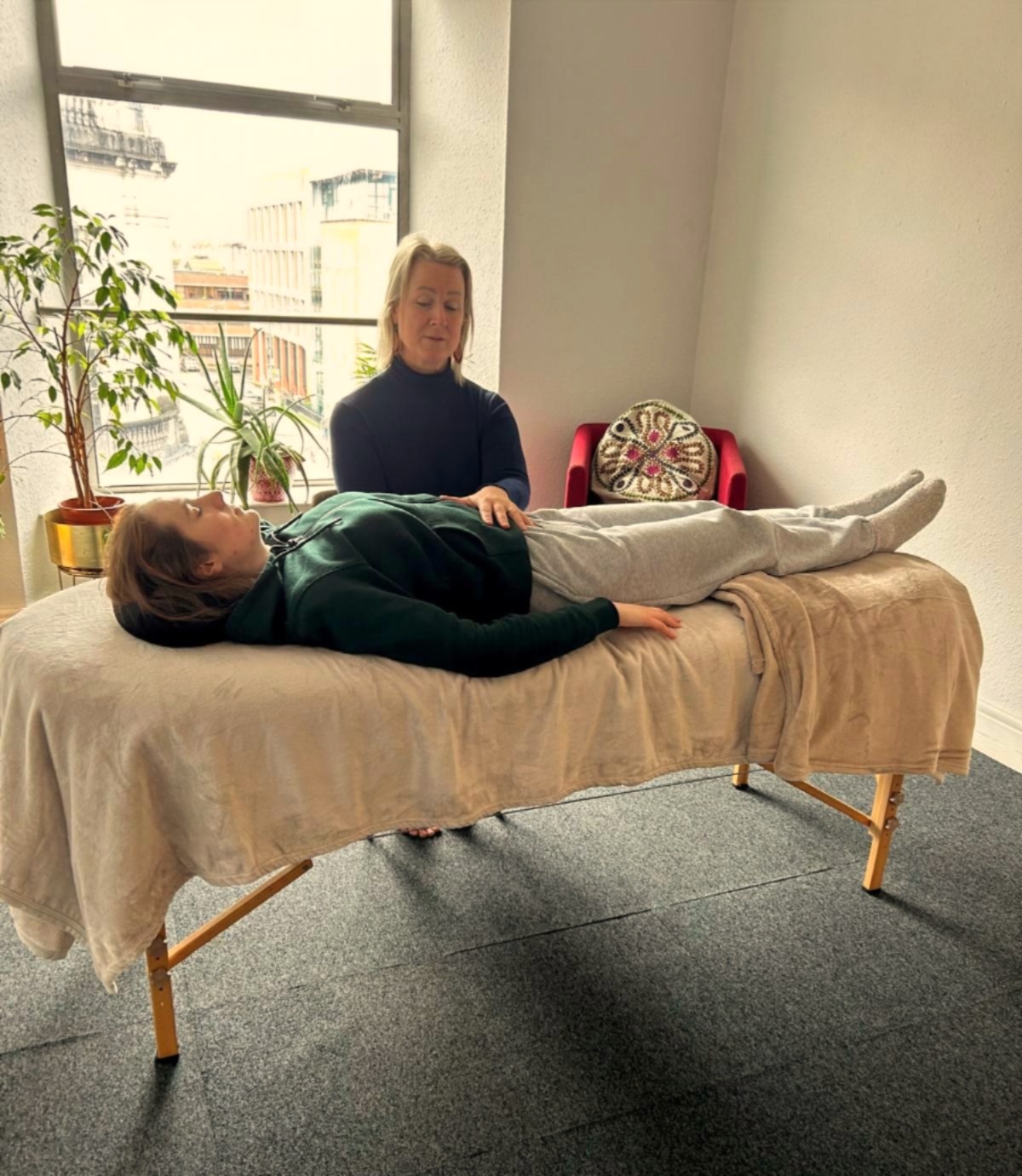
 Craniosacral Therapy with Julie